Vulcano series, Superpadder and Superscreen: high-performance solutions for pipeline construction

From the compact Vulcano Smart to the high-capacity Superpadder: technologies and configurations for preparing material along the pipeline route.
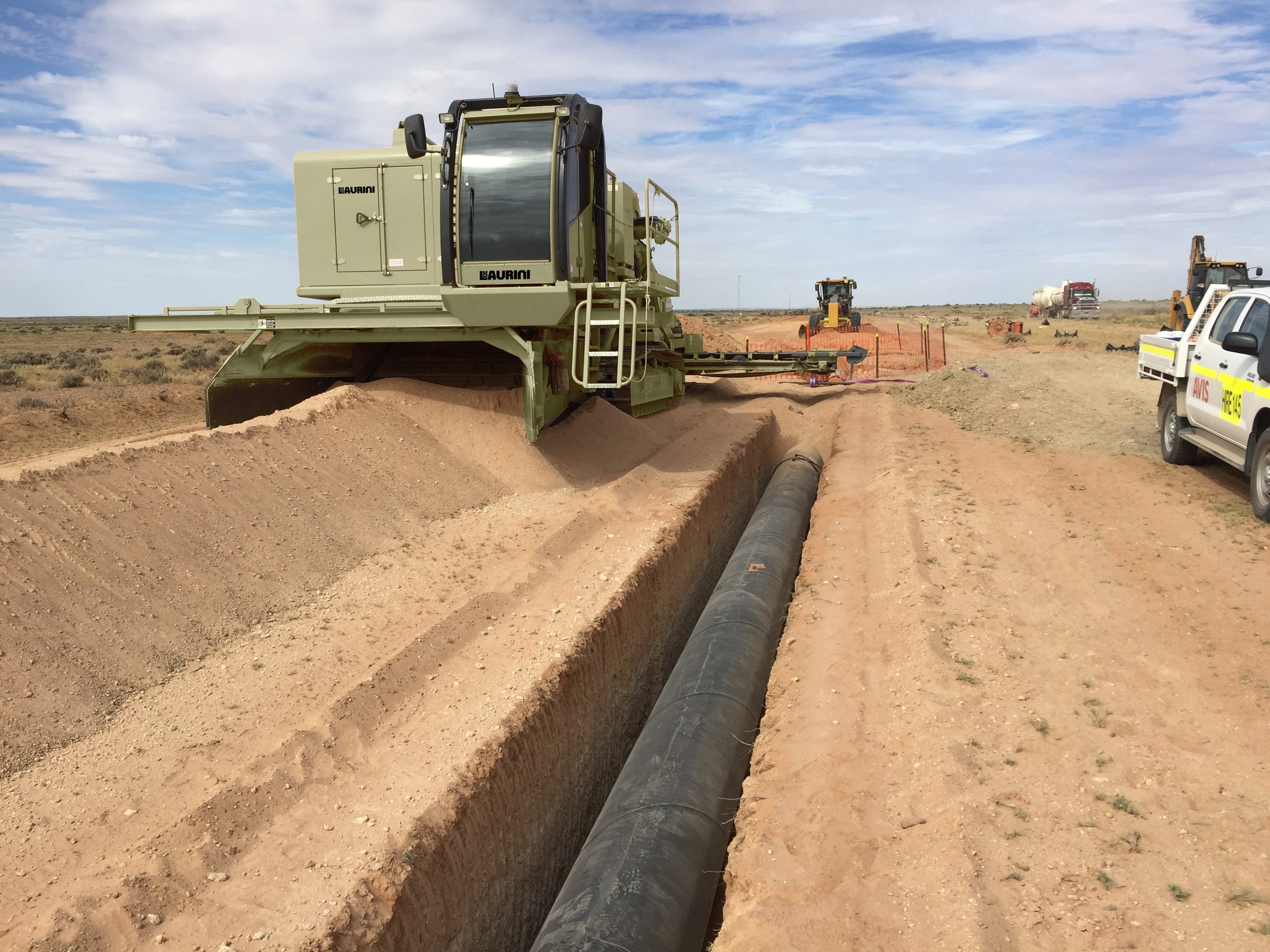
On pipeline construction sites, fine material is essential for two key stages: preparing the pipe bedding and padding the pipeline. Choosing the right machine therefore means considering ground conditions, the volumes to be processed and the organisation of work along the right-of-way.
The Laurini range comprises five solutions: Vulcano Smart, Vulcano 2.0, Vulcano XXL, Selfloading Superscreen and Superpadder. All are designed for on-site screening, with configurations suited to different operating requirements.
The first point of comparison is the feeding system. Vulcano models are loaded by an excavator, while Selfloading Superscreen and Superpadder collect material directly from the windrow running alongside the trench. This distinction leads to different ways of organising the work cycle.
Vulcano Series: different models for different needs
Vulcano Smart: compact design and easy transport
Vulcano Smart is the most compact model in the series. It delivers an output of up to 210 m³/h and accepts feed material up to 400 mm in size. Its 2.5-metre width and hopper with fixed sidewalls within the machine’s transport envelope make it easier to transport. The configuration includes radio remote control, interchangeable screen mesh, a variable-speed apron feeder and a retractable, folding conveyor.
Its advantage lies in combining screening and discharge functions in a machine designed to minimise overall dimensions.
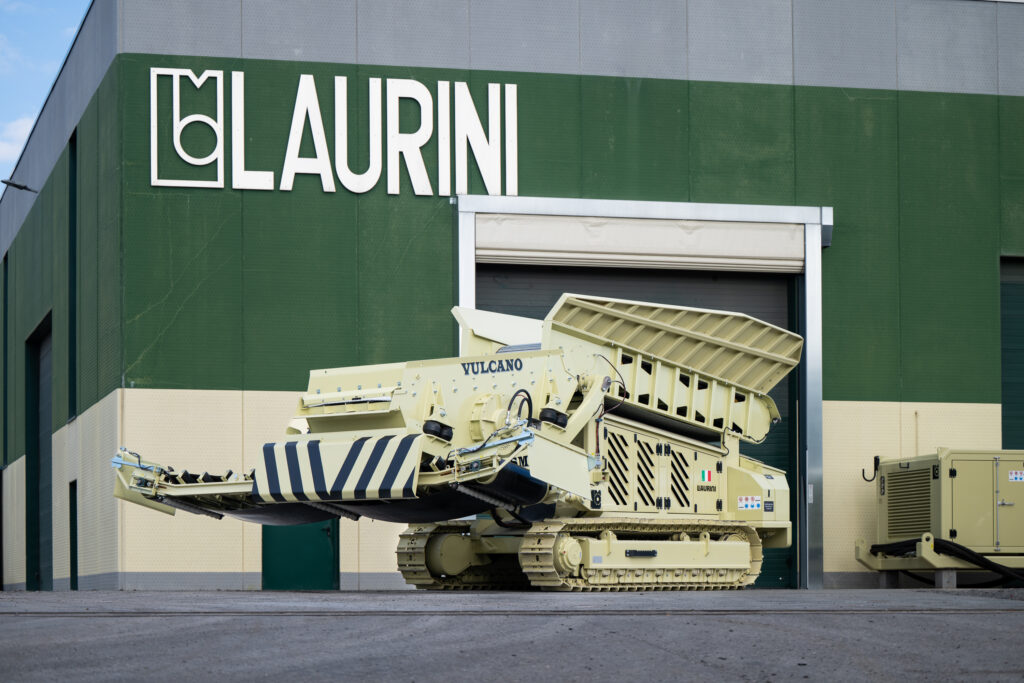
Vulcano 2.0: versatility along the right-of-way
Vulcano 2.0 has a maximum output of 260 m³/h and accepts feed material up to 500 mm in size. The interchangeable screen mesh allows material grading to be adapted to project requirements, while the adjustable feeder helps control the flow to the screen.
The conveyor deposits fine material directly into the trench and is both retractable and foldable. The hopper’s hydraulic sidewalls fold down for transport. This versatile solution integrates screening into a variety of right-of-way layouts.
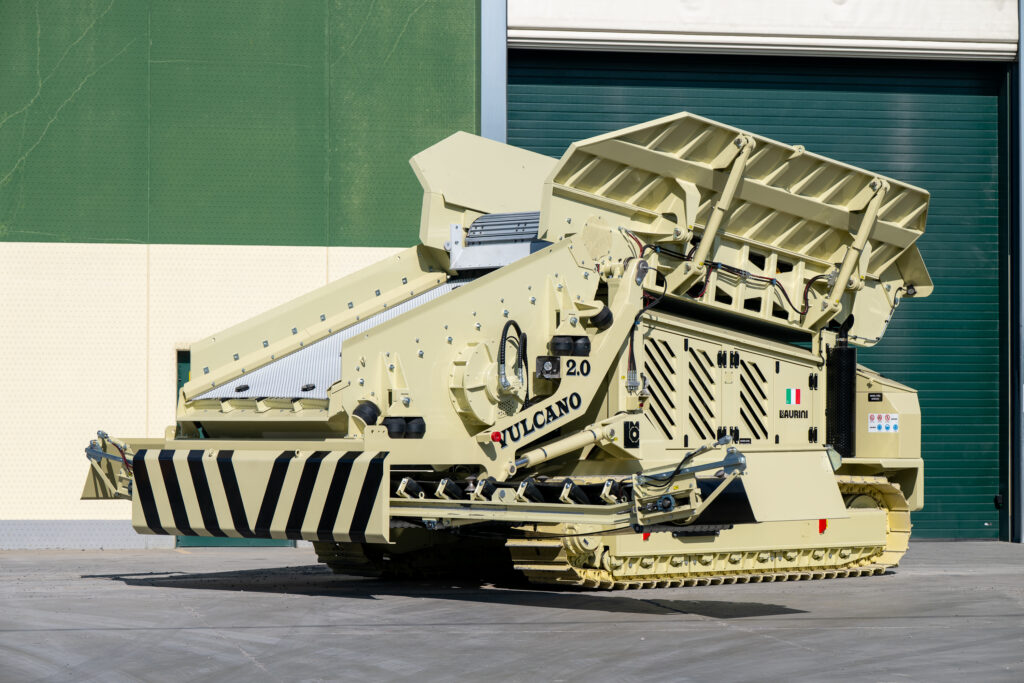
Vulcano XXL: the highest capacity in the series
Vulcano XXL is the largest model in the Vulcano family. With a maximum output of 320 m³/h and feed material sizes of up to 600 mm, it meets the needs of projects requiring higher processing volumes.
It retains the series’ core design: excavator loading, remote control, interchangeable screen mesh and a variable-speed apron feeder. A hopper with hydraulically folding sidewalls and a retractable, folding conveyor complete a configuration designed to combine processing capacity with operating flexibility.
Choosing XXL maximises production when the loading system can also supply the machine continuously. Screen sizing must therefore be coordinated with excavator capacity and the availability of material at the work front.
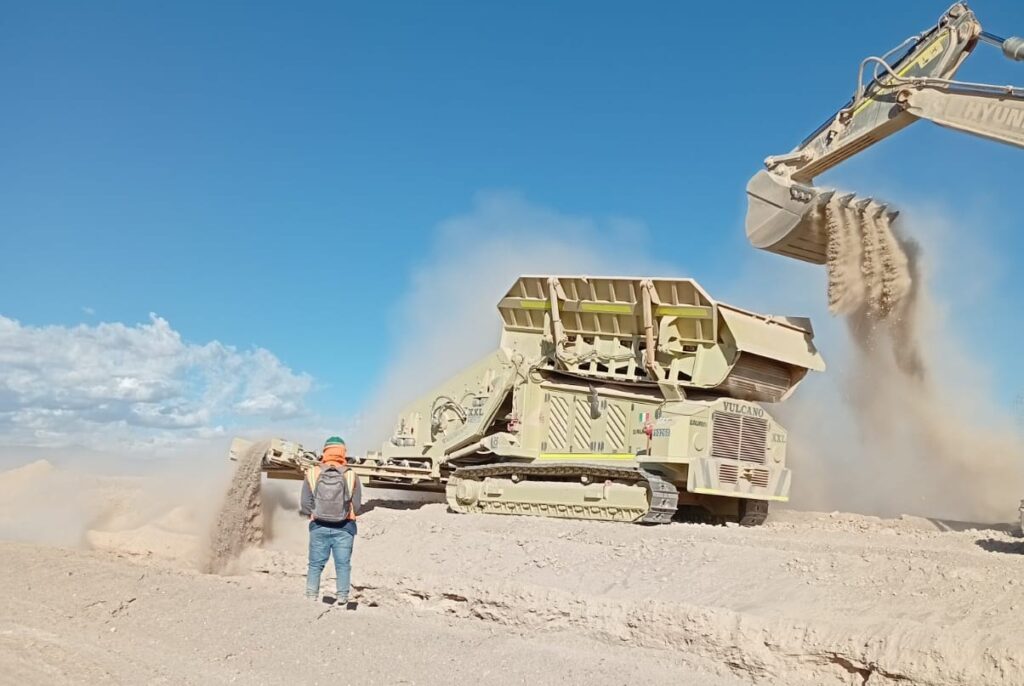
Technical comparison of the Vulcano series
| Feature | Vulcano Smart | Vulcano 2.0 | Vulcano XXL |
| Maximum output* | 210 m³/h | 260 m³/h | 320 m³/h |
| Maximum feed size | 400 mm | 500 mm | 600 mm |
| Feeding system | Excavator-loaded | Excavator-loaded | Excavator-loaded |
| Hopper configuration | Fixed sidewalls within the transport envelope | Hydraulically folding sidewalls | Hydraulically folding sidewalls |
| Key strength | Compact dimensions and easy transport | Operating versatility | Production capacity |
The technical data sheet specifies maximum values for dry material under optimal conditions. Actual output must be assessed according to the material, the screen mesh used and operating conditions.
How to choose a Laurini self-propelled screening machine
Comparing the three models starts with the site’s priorities. Smart meets the need to keep overall dimensions down; Vulcano 2.0 combines capacity and versatility; XXL increases both the volume of material that can be processed and the maximum permissible feed size.
Maximum feed size indicates the size of material the machine can accept. The particle size of the screened product, however, depends on the installed screen mesh. These are two separate parameters to consider when selecting pipeline bedding equipment.
To assess productivity during pipe laying, the entire sequence must also be considered: loading, screening, discharge and forward travel. A high hourly capacity reaches its full potential when these stages are coordinated.
Superpadder and Superscreen: efficiency on large pipeline projects
When a project calls for direct collection from the windrow alongside the trench, a self-loading pipeline screening machine combines feeding and screening in a single unit. Selfloading Superscreen and Superpadder apply this principle to large construction sites, offering different capacities and configurations.
Selfloading Superscreen: material control and flexibility
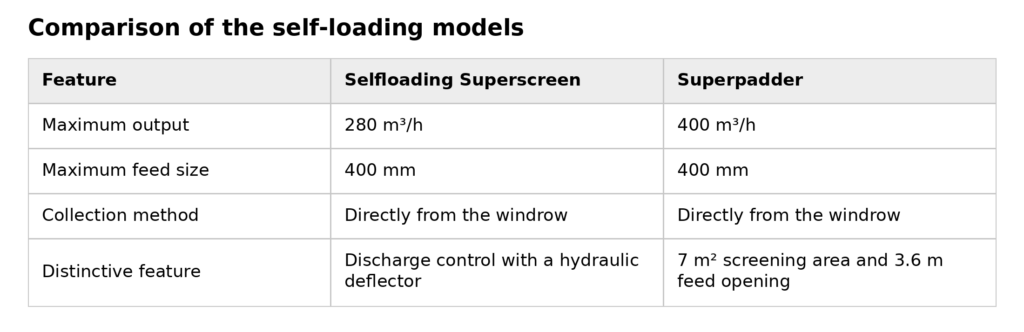
Selfloading Superscreen delivers a maximum output of 280 m³/h and can process material up to 400 mm in size. It is suitable for terrain with relatively uniform topography and is operated by radio remote control.
The retractable, variable-speed cross conveyor allows discharge into the trench to be controlled. A hydraulic deflector at the end of the conveyor directs the fine material, adapting its distribution to the requirements of the operation.
Interchangeable screen meshes allow the particle size grading to be changed. An optional rear conveyor for oversize material is available, as is a version with a movable, air-conditioned cab and roll bar. The machine’s key strength is its ability to combine direct collection, screening and discharge control in a coordinated cycle.
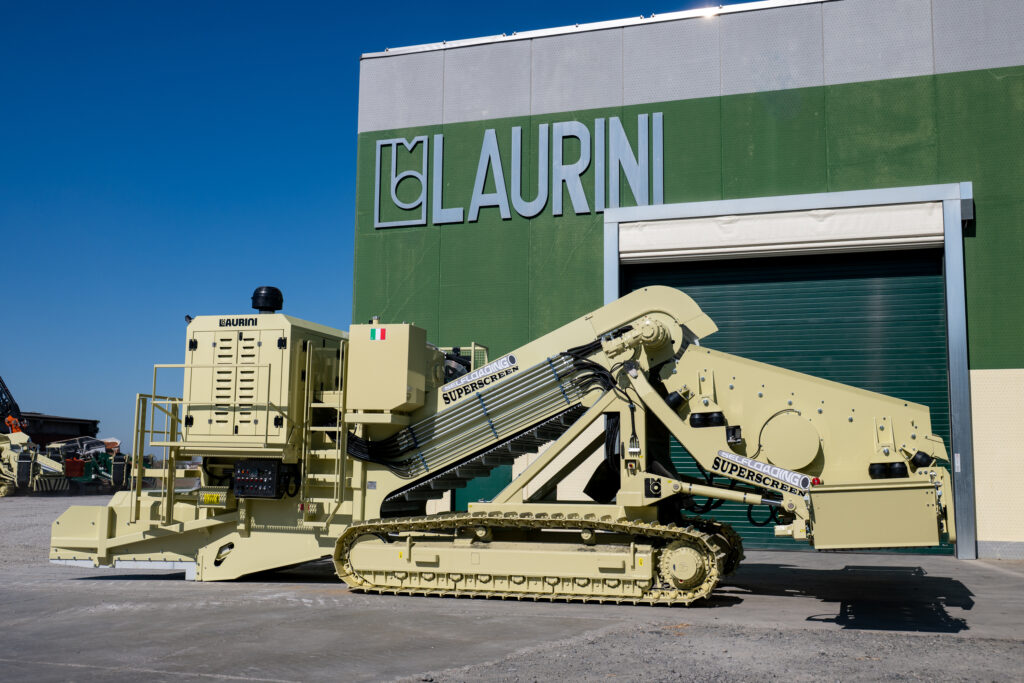
Laurini Superpadder: capacity for large volumes
Laurini Superpadder is the largest model in our range of vibrating screening machines. Its 7 m² screening area and 3.6-metre-wide feed opening support a maximum output of 400 m³/h of screened material. Maximum feed size is 400 mm.
Designed for large projects and terrain with uniform topography, it features interchangeable screen mesh and a folding, laterally shifting conveyor. Radio remote control allows the operator to observe both material feeding and the discharge of fine material into the trench.
The machine is also available with a laterally movable, air-conditioned cab and roll bar. Its capacity is an advantage for sites that need to maintain a high supply of screened material along the route.
Comparing the two self-loading models
From machine capacity to site efficiency
The choice between a Vulcano model and a self-loading machine should start with how material is made available along the right-of-way. With excavator feeding, screening is coordinated with a dedicated loading machine. With direct collection from the windrow, feeding and forward travel are integrated into the screening machine’s operation.
Comparing the solutions requires an assessment of the right-of-way geometry, route uniformity, windrow layout, planned machine relocations and demand for fine material. These factors help turn rated specifications into a choice suited to the project.
Process adjustment also matters: selecting the right screen mesh, managing the feed flow and directing the discharge align material production with subsequent operations. Pipe-laying productivity depends on continuity across the entire construction site.
Frequently asked questions about pipeline screening machines
What is the difference between Vulcano and the self-loading models?
The Vulcano series requires excavator loading. Selfloading Superscreen and Superpadder collect material directly from the windrow positioned parallel to the trench.
Which model offers the highest production capacity?
Superpadder among the self-loading models, and Vulcano XXL among the excavator-loaded models. The choice must nevertheless take operating conditions and the planned feeding system into account.
Can the particle size of the screened material be changed?
All the models described use interchangeable screen meshes or grids, selected according to the material and project specifications.
A range built around pipeline construction needs
Compact dimensions, versatility, capacity and direct material collection are the features that distinguish our solutions. With the Vulcano series, Selfloading Superscreen and Superpadder, we offer different configurations to support pipe bedding preparation and pipeline padding.
Explore Laurini’s range of self-propelled screening machines and contact our technical team to identify the model and configuration best suited to your next pipeline project.